
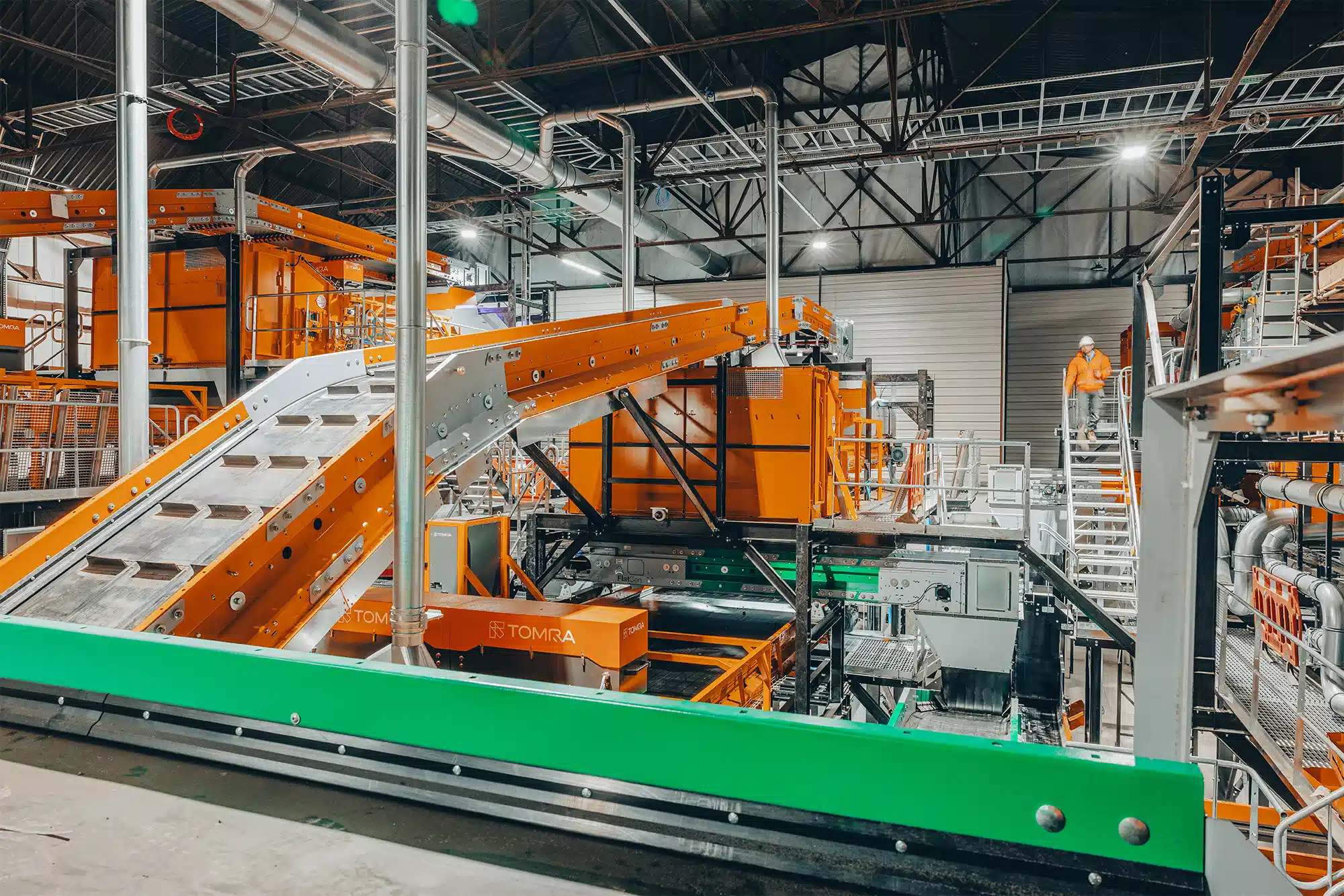
Transforming waste into a national infrastructure utility
Growth generates waste — and the faster communities grow, the faster that challenge compounds. Legacy systems strain under volume, landfill capacity diminishes, and the cost of inaction rises with every passing year. Across emerging and mature economies alike, waste infrastructure is no longer a municipal afterthought. It sits alongside water, energy, and transport as a foundational pillar of modern statecraft. CivicFirst builds and deploys an architecture that transforms waste from a problem into a revenue-generative national utility.
The platform
CivicFirst's proven infrastructure platform designs, builds, finances, and operates investment-grade facilities that convert unmanaged material flows into structured, traceable, revenue-generating resource systems.
We provide a fully integrated platform — not a contractor or single-project bidder. Operating at scale in the UK, our model brings together facility design, AI-enabled processing technology, capital structuring, sovereign and institutional financing, long-duration operations, and offtake into recovered commodity markets. Facilities are deployed in modular form and aggregated into national or regional networks, allowing governments and investors to commission a single plant, a multi-site cluster, or a country-wide utility under a unified operating standard.
Architecture
CivicFirst facilities are built around two parallel processing lines:
- Commercial & Industrial (C&I) handling business and trade waste, with high-purity material recovery for direct sale into recyclate and secondary commodity markets.
- Dry Mixed Recyclables (DMR) processing household-origin material — captured upstream of contamination and delivered as a clean, sorted feedstock that achieves recovery rates approximately thirty per cent higher than facilities treating raw municipal solid waste.
This optimised architecture guarantees recyclable recovery performance, throughput consistency, and offtake reliability. Underwriting the platform for institutional capital.
The residual fraction arising from operations, material that legacy operators would consign directly to landfill, is captured, conditioned, and engineered into refuse-derived fuel (RDF) for power generation.
Performance demonstrated at scale
The CivicFirst platform is grounded in operating infrastructure. Sovereign clients and institutional investors are not assessing a concept; they are evaluating a working system with demonstrated throughput, recovery metrics, and operating cost benchmarks, and a project pipeline that scales it.
Each CivicFirst facility is engineered around an optimised 400,000 tonnes-per-annum throughput, configured for AI-enabled optical sorting. Bespoke platform configurations extend from 400,000 tpa up to twenty million tpa, deployable across diverse geographies. All generating recovered commodity revenues consistent with the upper quartile of international circular infrastructure operators.
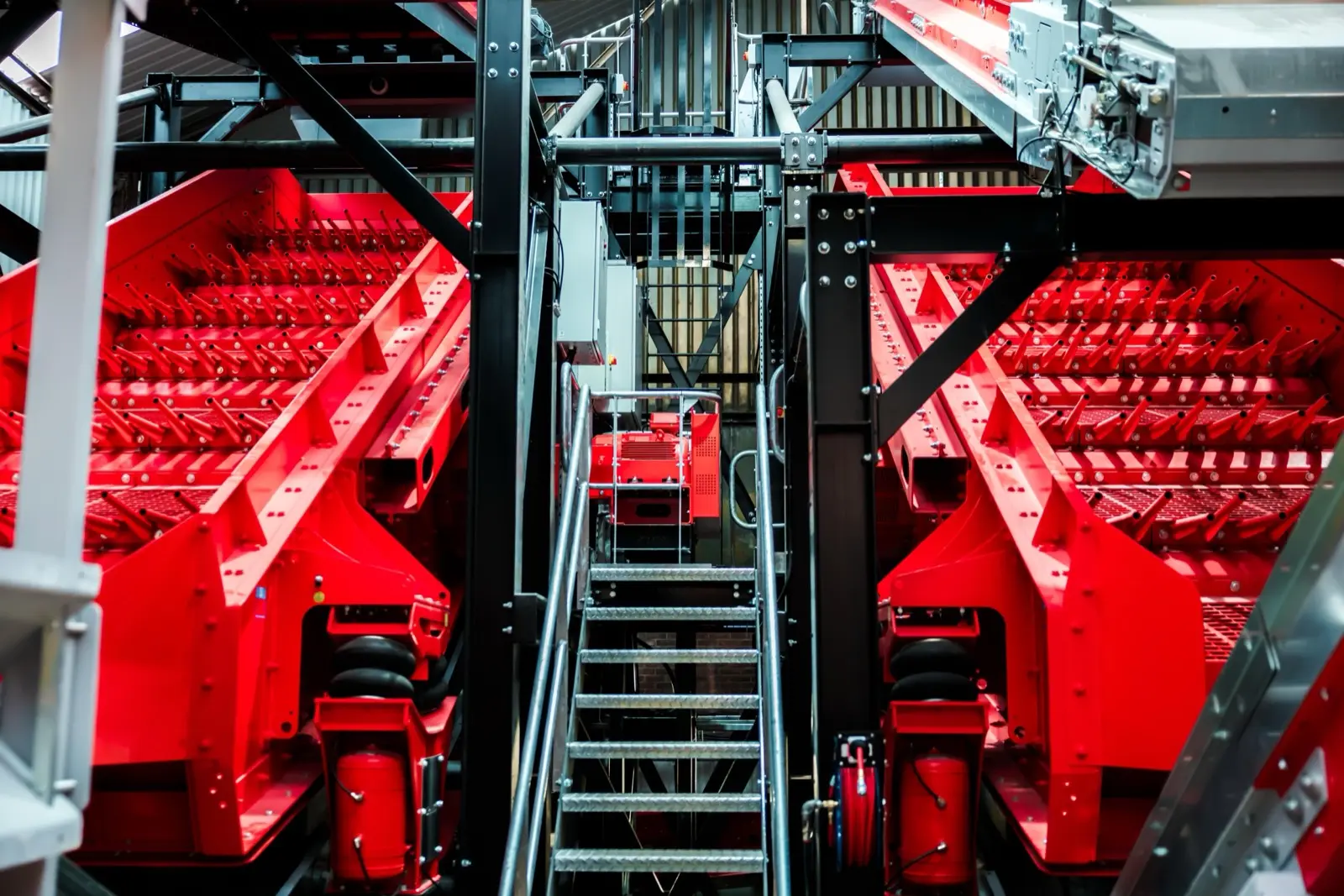
Conveyors feeding AI optical sorting unit
Technology that improves with every tonne
CivicFirst facilities are AI-native. Sensor-based monitoring, computer-vision optical sorting, and real-time analytics are integral from day one — not retrofitted to legacy operations. The advantages compound across the value chain: higher purity output, fewer rejects, improved labour efficiency, lower energy intensity per tonne, and a continuous data feedback loop that sharpens sorting accuracy over the life of the asset.
Component-level traceability is built into both processing lines. For sovereign clients, this delivers verifiable national reporting on material recovery, landfill diversion, and circular economy contribution. For industrial off-takers — including premium polymer purchasers in regulated supply chains — it provides the provenance and quality assurance required to use CivicFirst-recovered materials with confidence.
Investment-grade infrastructure
CivicFirst project structures are designed around sovereign equity participation, infrastructure fund co-investment, and project-level debt with appropriate export credit support. We work with sovereign wealth funds, national environment authorities, multilateral lenders, and commercial banks to assemble capital stacks consistent with the long operating life of the assets.
Landfill cost avoidance is integrated directly into our financial modelling, alongside recovered commodity revenue, gate fee income, and RDF-derived energy value. The resulting financial profile compares favourably with comparable transport, energy, and water infrastructure — and is increasingly recognised by institutional investors as a distinct, allocable category within infrastructure portfolios.
International deployment
The CivicFirst platform is being deployed and proposed across multiple jurisdictions, including national-scale programmes in various international geographies. Our architecture has been developed to engage at sovereign level — alongside governments, national environment authorities, sovereign wealth funds, premium industrial off-takers, and multilateral institutions — to deliver country-scale circular waste utilities, not isolated assets.
The platform adapts to local feedstock composition, regulatory framework, and offtake market in each geography. The design discipline, performance benchmarks, and investor-grade documentation remain constant.
The return
The proposition CivicFirst delivers is unambiguous: reduced landfill dependence and the avoided long-term liability that accompanies it; significantly lower whole-life cost than continued reliance on legacy disposal; measurable environmental and climate outcomes that contribute directly to national targets; and new, traceable value from material flows that would otherwise be lost.
CivicFirst recognises waste as one of the most under-invested, under-engineered, and highest-return categories of national infrastructure available today. Our proven platform delivers internationally at scale.
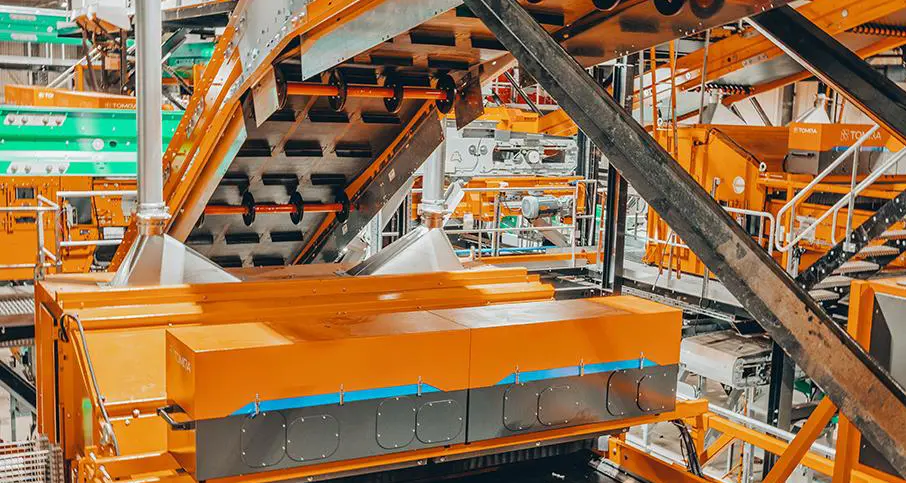
Waste stream processing for commodity creation